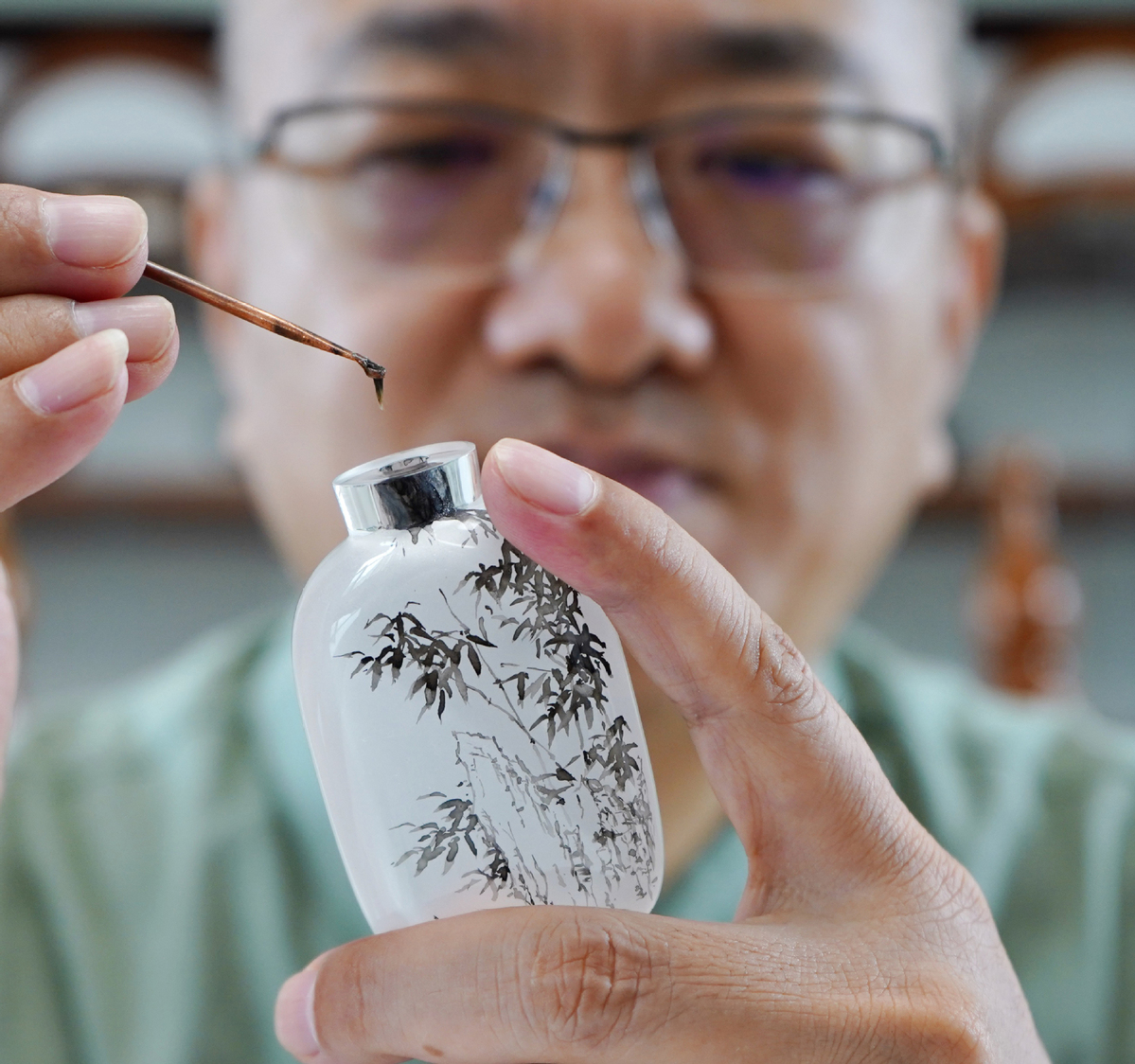
Hengshui Interior Painting
Introduction
Hengshui interior painting is a distinctive art form that involves painting intricate designs on the interior surfaces of snuff bottles. Originating in Hengshui city, Hebei province, this technique requires a high degree of precision and skill, as artists must paint through the narrow mouth of the bottle. Utilizing a specially designed paintbrush, the process involves several stages, including composition, delineation, wrinkle-removal, and coloring. Initially used to adorn snuff bottles, which were popular during the Qing Dynasty (1644-1911) for storing powdered tobacco, Hengshui interior painting is now celebrated as a collectible form of art. The art form's unique nature and historical significance led to its designation as a national-level intangible cultural heritage in China in 2006.
History
The history of Hengshui interior painting is deeply intertwined with the development of snuff bottles in China. Snuff bottles, which became popular during the Qing Dynasty, were initially functional items used to store and carry powdered tobacco. Over time, these bottles evolved into objects of art, with artisans adorning them with carvings and paintings. The technique of painting inside the bottles required innovation and skill, as artists had to work through the narrow opening of the bottle, applying paint to its inner surfaces.
The practice of interior painting in Hengshui developed as a regional specialty, distinguishing itself with unique techniques and artistic expressions. The skillful artisans of Hengshui became renowned for their ability to create intricate and detailed artwork inside these small vessels, which became prized possessions among collectors. The tradition of Hengshui interior painting has been passed down through generations, preserving the methods and styles that have come to define this unique art form.
In 2006, the significance of Hengshui interior painting was further recognized when it was inscribed as a national-level intangible cultural heritage in China. This designation not only acknowledged the historical and cultural importance of the art form but also helped ensure its preservation for future generations.
Styles and Techniques
Hengshui interior painting is characterized by its unique styles and techniques, which have evolved over time to incorporate both traditional and modern elements. The art form is known for its intricate detailing and the ability to create complex images within the confined space of a snuff bottle.
Traditional Techniques
Traditional techniques of Hengshui interior painting involve the use of a special paintbrush, designed to fit through the narrow mouth of a snuff bottle. Artists begin by conceptualizing the composition, carefully planning the placement of each element within the limited interior space. This is followed by delineation, where the outlines of the design are meticulously drawn.
The next step is wrinkle-removal, a process that ensures the surface inside the bottle is smooth and ready for coloring. Artists then apply various colors, layering them to achieve depth and contrast. Traditional themes often depicted in Hengshui interior paintings include landscapes, figures, animals, and symbols of Chinese culture such as dragons, phoenixes, and lotus flowers.
Modern Approaches
In recent years, Hengshui interior painting has incorporated modern approaches, expanding its thematic range and experimenting with new techniques. Contemporary artists may explore abstract designs, incorporate non-traditional color palettes, or use innovative methods to achieve new effects. Despite these modern influences, the essence of the traditional technique remains, as artists continue to paint through the narrow bottle opening, maintaining the skill and precision that define the art form.
Modern approaches have also led to collaborations with other art forms, allowing Hengshui interior painting to evolve while staying true to its roots. This blending of old and new has helped the art form remain relevant and appeal to a broader audience.
Cultural Significance
The cultural significance of Hengshui interior painting extends beyond its aesthetic appeal, reflecting the rich heritage of Chinese art and craftsmanship. As a traditional art form, it embodies the skill, creativity, and dedication of artisans who have passed down their knowledge through generations. The intricate designs and themes often seen in Hengshui interior paintings are deeply rooted in Chinese culture, symbolizing concepts such as harmony, prosperity, and longevity.
The art form's designation as a national-level intangible cultural heritage underscores its importance as a cultural treasure. It serves as a testament to China's artistic and cultural history, preserving traditional techniques while allowing for innovation and growth. Hengshui interior painting also plays a significant role in promoting cultural exchange, as its unique style captivates art enthusiasts and collectors worldwide.
Preservation and Conservation
Preservation and conservation efforts are crucial to maintaining the art of Hengshui interior painting for future generations. As a designated national-level intangible cultural heritage, there is a concerted effort to protect and promote this art form. This involves documenting traditional techniques, providing training for aspiring artists, and raising awareness of the art form's cultural significance.
Conservation initiatives also focus on the physical preservation of existing artworks, ensuring that they remain in pristine condition. This includes careful storage, display, and restoration practices to prevent damage and deterioration.
By prioritizing both the preservation of the art form and the protection of individual works, these efforts aim to ensure that Hengshui interior painting remains a vibrant and enduring part of China's cultural landscape.








